
Games for the very youngest
One tap, and something happens. That is all a one-year-old needs, and all these games ask for.
Soap Bubbles
Tap anywhere and a bubble floats up. There is no spot you can miss — the simplest game for the very youngest.
Play
from age 1 · no sign-up · no ads
Peekaboo
Something is wobbling. Tap it, an animal peeks out and its name is spoken. Peekaboo with sixteen animals.
Play
from age 1 · no sign-up · no ads
Sound Box
Six bells, six notes. The small one rings high, the large one low — and nothing here can sound wrong.
Play
from age 1 · no sign-up · no ads

Stickers
11 landscapes and 86 stickers to put into them. Drag them in or just tap — each as often as you like. The only game here without a task.
Play
ages 1 to 5 · no sign-up · no ads

Free the Animals
16 animals are in the cage. Tap it and one after another hops out onto the meadow. Rhino, tiger, skunk, panda and twelve more.
Play
ages 1 to 3 · no sign-up · no ads
Feed the Animals
What does the lion eat? Every animal sits in its own home — the savanna, the bamboo forest, the ice — with three foods laid out below. One of them fits.
Play
ages 1 to 4 · no sign-up · no ads
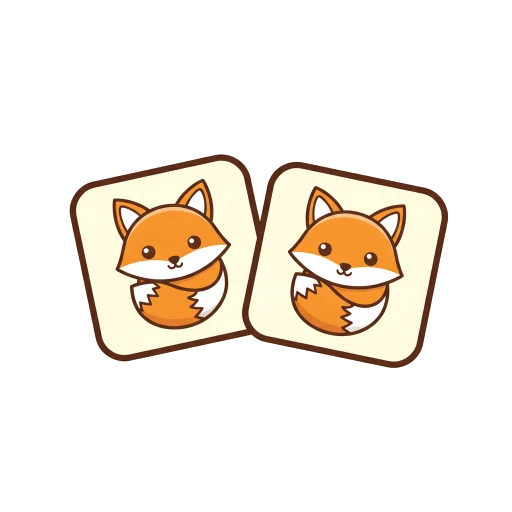
Find the Pairs
Six cards, three animal pairs. Turn them over and find what matches: a little bell rings, the animal stays put, and its name is spoken. 40 animals, new ones every round.
Play
ages 2 to 4 · no sign-up · no ads
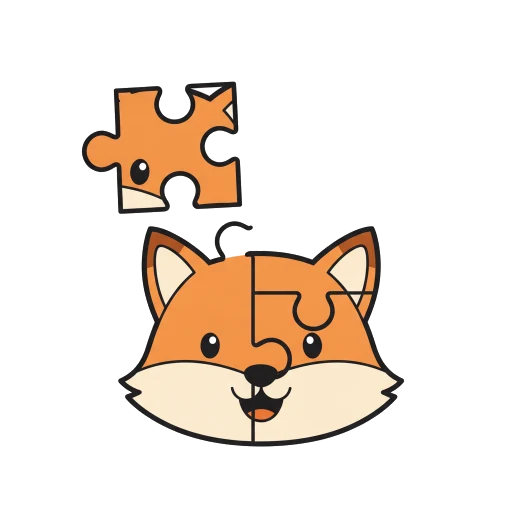
Jigsaw Puzzles
A picture broken into large pieces. Drag them to their spot or tap them: they click into place, and the finished picture gets a little celebration. 20 pictures, 4, 6 or 9 pieces to choose from.
Play
ages 2 to 4 · no sign-up · no ads
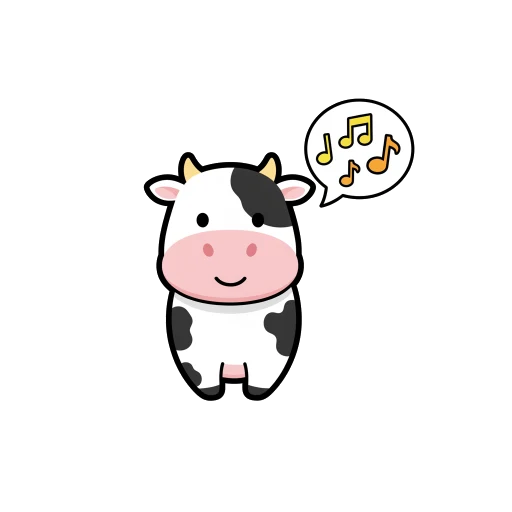
Animal Sounds
Who says Moo? Three animals are waiting, one of them fits. Tap the wrong one and you hear that animal's own sound — that is an answer too. 15 animals, from the farm to the lion.
Play
ages 2 to 4 · no sign-up · no ads

Wash the Animals
A dirty animal is sitting in the tub. Tap the spots away until it shakes itself dry and its fur shines again.
Play
ages 2 to 5 · no sign-up · no ads
Is your child older? Learning games from age 3 practise letters, numbers, colours and shapes.
What toddlers actually understand about a game
Between the first and third birthday a child learns one big thing about screens: I do something, and then something happens. That cause-and-effect experience is the entire appeal and the entire achievement. Rules, order, goals and competition arrive years later.
This is where most "games from age 1" fail: they are really games for four-year-olds with the numbers removed. There is still a right and a wrong answer, a progress bar, an ending. A one-year-old taps beside the target, nothing happens, and the device gets put down.
How to recognise a good game for this age
- The target is huge. A toddler does not aim, they tap in a direction. Anything smaller than a palm is too small.
- The answer is immediate. If more than a moment passes between tap and reaction, the connection is lost.
- Wrong does not mean lost. No error sound, no red cross, no reset. Trying again never costs anything.
- It does not end by itself. Repetition at this age is not a lack of ideas, it is how learning works. Freeing the same animal for the twentieth time is a complete success.
- The sound can be switched off. At the kitchen table, on a train, next to a sleeping sibling.
Why animals
Animal names are among the first words children speak, ahead of most everyday objects. They are clearly distinguishable, they have faces, and each fits into a single picture. That is why our cage holds sixteen clearly different animals: rhino, cougar, tiger, crocodile, rabbit, skunk, elephant, lion, giraffe, monkey, zebra, bear, penguin, fox, panda and turtle. As each one is freed its name is spoken, so the child sees the animal and hears its word in the same moment.
From tapping to matching
In Feed the Animals each animal sits in its own habitat, with three foods laid out below, one of which fits. For a two-year-old this is at first just another tapping game with lovely pictures: tap somewhere, something happens, the animal is pleased. For a four-year-old it becomes something else, a real matching task. They see the food, recall the animal, and decide before the finger even touches the screen. The same game grows with the child without the sequence itself ever changing.
That is why each animal sits in its own setting rather than an interchangeable cage: the panda in the bamboo forest, the penguin on the ice, the lion on the savanna. The place itself tells part of the story: wherever grass grows, something is probably grazing on it. Near the panda lies bamboo, near the penguin fish, near the rabbit a carrot. The child does not need to know the connection by heart, they can see it.
Ten games, three steps
The section is meant as a sequence, not a collection. Soap Bubbles comes first: there is no place you have to hit — the whole area answers. That is the step a child starts on at twelve months. Peekaboo and the Sound Box ask for a first deliberate tap but still answer every single one. Only Feed the Animals and Wash the Animals set a task, and even there a finger that lands beside the target costs nothing.
Find the Pairs belongs to that same last step alongside Feed the Animals and Wash the Animals: a task where a stray tap costs nothing. Unlike those games, tapping alone is not enough here, the child has to remember where an animal was. That is why the six cards lie face up for a moment at the start of each round, and after two failed tries there is a hint: the matching card wiggles. That keeps the only game in this section built around remembering solvable even for a two-year-old.
Jigsaw Puzzles belongs in the last stage too: putting a piece down in the wrong spot costs nothing, it just flies back. What is new is that the child sees a piece of the picture and a shape on every piece, and looks on the board for where it belongs, the faint picture on the board helps with that. A child who can already drag places the piece there directly, a child who only taps watches it glide into its spot, and so still notices where it belongs. After two missed tries, the correct spot lights up. There are 4, 6 or 9 pieces, so the same game grows with the child.
Animal Sounds belongs to that last step as well, but differs from every other game in one respect: there is no tap that gives nothing back. Tap the animal being asked for and it hops and says its name; tap another one and you hear THAT animal's own sound. So even the supposed mistake hands the child exactly the information they were after, and they keep learning while trying rather than in spite of trying. From the second missed try the right animal starts to bob. The sounds are spoken rather than played back: a voice says "Moo", the way a grown-up would — and it is that spoken version a toddler repeats. The question is always written out as well, so the game works with the sound switched off.
Besides the Sound Box a second game steps out of that line, and it steps forward: Stickers. 11 landscapes, 86 stickers, and not one question that has to be answered. Tap, and an animal lands in the middle; drag, and it lands exactly where you meant it to. Both ways reach the same result — which is why it already works at one and still holds at five. A four-year-old builds a scene they can explain, a one-year-old sticks twenty elephants on top of each other, and both are right.
The Sound Box deliberately steps out of that line: it never arrives anywhere. Its six bells are tuned pentatonically, to a scale without semitone steps — the same one children's xylophones have used for decades. That is why any sequence of taps sounds like music, whatever the order. With an ordinary scale every second tap produces a semitone, and then the adult in the room turns the sound off after two minutes.
Screen time at this age
Paediatric guidance is clear: very little under the age of two, clearly limited afterwards, and best of all accompanied by an adult. A game for one-year-olds should therefore contain nothing that pushes towards continuing, and that is exactly what has been left out here: no series, no reward for staying, no next level already blinking. When the child wants to stop, they stop, and nothing is lost.
As your child grows, Wimolino offers learning games from age 3 covering letters, numbers, colours and shapes, plus thousands of coloring pages to print for free.