Simple Mandalas for Kindergarten: First Coloring Experiences
Unlocking Creativity: The Magic of Simple Mandalas for Kindergarteners
In the vibrant world of early childhood education, finding activities that are both engaging and developmentally beneficial can be a delightful challenge for parents and educators alike. Among the myriad of creative pursuits, coloring stands out as a timeless favorite. But what if we could elevate this simple act into an experience that fosters focus, fine motor skills, and a sense of calm? Enter the mandala – a beautiful, intricate design that, when simplified, becomes a perfect tool for our youngest artists.
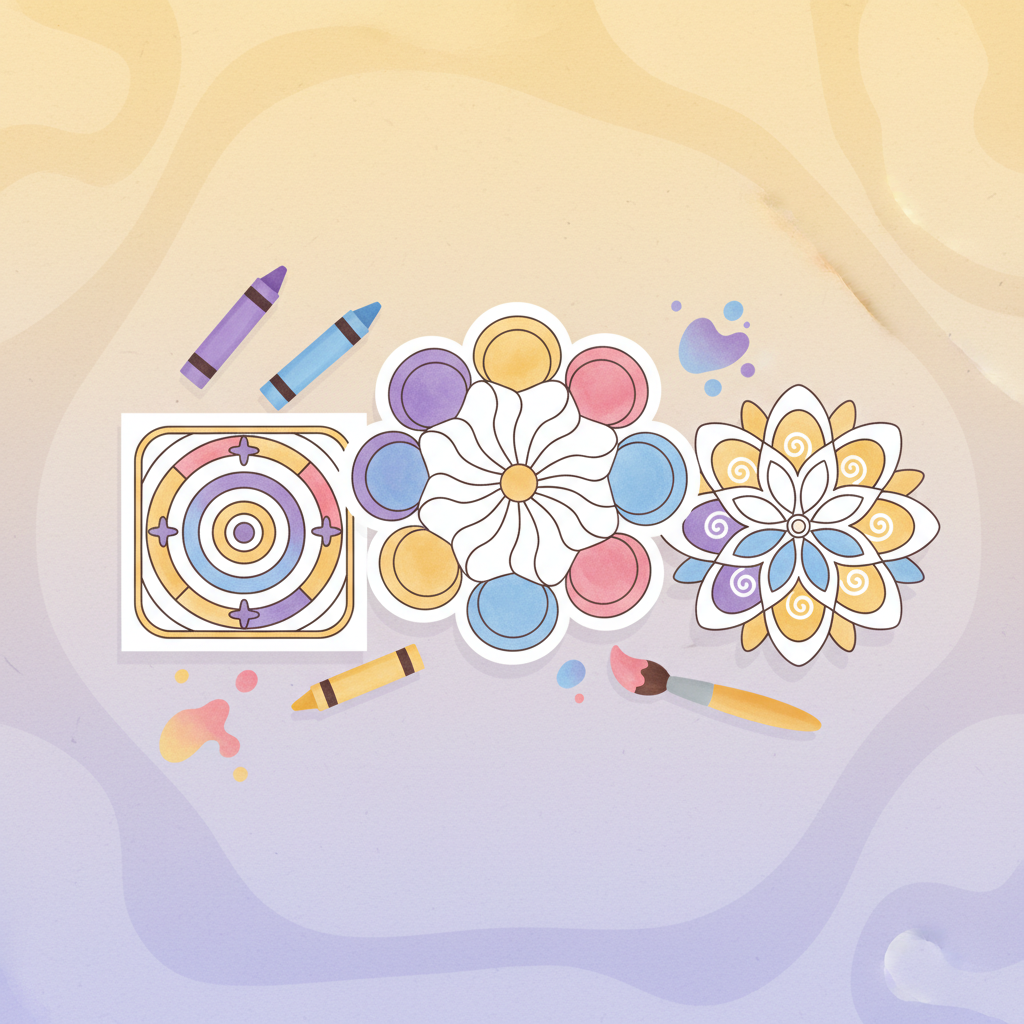
For kindergarten children, the concept of a mandala doesn't need to be complex. It's about introducing them to symmetrical patterns and encouraging them to fill spaces with color, creating their own unique masterpiece. The key is simplicity. Forget the elaborate, highly detailed mandalas often seen in adult coloring books. For tiny hands and developing minds, the most effective mandalas feature large, open areas, thick lines, and easily discernible shapes. These simple designs are not just easier to color; they are specifically crafted to support the foundational skills crucial for this age group.
This article will explore why simple mandalas are an excellent choice for kindergarten-aged children, what characteristics make a mandala age-appropriate, and how you can introduce this wonderful activity to foster creativity, concentration, and a joyful first coloring experience.
Why Mandalas are Perfect for Little Hands and Growing Minds
Mandalas, originating from ancient Sanskrit, mean "circle" and represent wholeness and harmony. While their spiritual significance might be beyond the grasp of a kindergartener, the act of coloring them offers a wealth of developmental benefits that are incredibly valuable during these formative years.
Fostering Key Developmental Skills:
- Fine Motor Skill Development: Holding crayons or markers, controlling their movement within lines, and applying varying pressure all contribute to strengthening the small muscles in children's hands and fingers. This is a crucial precursor to writing and other daily tasks.
- Hand-Eye Coordination: The process of guiding a coloring tool precisely within the boundaries of the mandala pattern significantly enhances hand-eye coordination. This skill is vital for everything from playing sports to reading.
- Concentration and Focus: In a world full of distractions, engaging in an activity that requires sustained attention is incredibly beneficial. Coloring mandalas encourages children to focus on the task at hand, helping to lengthen their attention span in a gentle, enjoyable way.
- Creativity and Self-Expression: While the pattern is pre-drawn, the choice of colors and how they are combined is entirely up to the child. This freedom allows for immense creative expression, helping them to explore color theory (even if subconsciously) and develop their artistic preferences.
- Emotional Regulation and Calm: The repetitive and focused nature of coloring can be incredibly soothing. Many children find coloring mandalas a calming activity that helps them relax, reduce stress, and even process emotions in a quiet, constructive manner. It provides a peaceful escape from the hustle and bustle of their day.
- Symmetry and Pattern Recognition: Mandalas are inherently symmetrical. Even simple ones introduce children to the concept of balanced design and repeating patterns, laying an early foundation for mathematical and spatial reasoning.
By providing simple mandalas, we offer children an accessible entry point into these benefits without overwhelming them with complexity.
Characteristics of Age-Appropriate Mandalas for Kindergarteners
Not all mandalas are created equal, especially when it comes to suitability for young children. The key to a successful first coloring experience lies in selecting designs that are specifically tailored to their developmental stage. Here’s what to look for:
What Makes a Mandala Kindergarten-Friendly?
- Large, Open Spaces: This is perhaps the most important feature. Kindergarteners are still developing their precision. Mandalas with expansive areas make it easier for them to color without feeling frustrated by trying to stay within tiny boundaries.
- Thick Outlines: Bold, clear lines act as better visual and physical guides for children. They provide a more forgiving "wall" to color against, making the activity less daunting.
- Simple, Recognizable Shapes: Look for mandalas composed of basic geometric shapes like circles, squares, triangles, or familiar elements such as flowers, stars, suns, or leaves. These are easier for children to identify and relate to.
- Minimal Intricacy: Avoid designs with many small, repeating details or complex overlapping patterns. The overall design should be easy to "read" and understand at a glance.
- Clear Symmetry: While some abstract mandalas exist, simple symmetrical patterns are often more appealing and easier for young children to process, offering a sense of order and balance.
Imagine a mandala that looks like a large flower with big petals, or a sun with bold rays, or a simple spiral pattern. These types of designs invite children to explore color freely and joyfully, without the pressure of perfection. Websites like Wimolino.com offer a fantastic selection of free, printable coloring pages, including simple mandalas specifically designed with these characteristics in mind, making it easy for parents and educators to find appropriate templates.
Introducing Mandalas: Tips for a Positive First Experience
The way you introduce any new activity can significantly impact a child's engagement. Here are some practical tips for making mandala coloring a positive and enriching experience for kindergarteners:
Setting the Stage for Creativity:
- Choose the Right Tools:
- Crayons: Chunky crayons are ideal for small hands as they are easier to grip.
- Washable Markers: Broad-tipped, washable markers can also be great, offering vibrant colors and smooth application, which can be less fatiguing than pressing hard with crayons.
- Colored Pencils: While good for precision, they might be more challenging for sustained coloring for this age group.
- Create a Calm Environment: Set up a quiet, well-lit space where the child can focus without too many distractions. A comfortable chair and a flat surface are essential.
- Explain Simply: You don't need a lengthy explanation. You can say something like, "This is a special picture called a mandala. It has lots of patterns and circles, and we get to fill it with all your favorite colors!"
- Emphasize the Process, Not Perfection: Encourage children to enjoy the act of coloring. Reassure them that there's no "right" or "wrong" way to color a mandala. The goal is exploration and enjoyment, not creating a perfectly colored image.
- Encourage Color Choices: Ask them about their color choices. "Why did you choose blue for that part?" or "What color makes you feel happy?" This encourages self-reflection and personal expression.
- Color Together (Optional): Sometimes, coloring alongside your child can be a wonderful bonding experience and model engagement. You can each color your own mandala or even collaborate on a larger one.
- Time It Right: Offer mandalas when the child is calm and receptive, not when they are overly tired or restless. Short, focused sessions are better than long, forced ones.
Remember, the primary goal is to provide a joyful and enriching activity that supports their development naturally. The beauty of the finished mandala is secondary to the benefits gained during the coloring process itself.
Beyond Coloring: Learning and Growth Through Mandalas
While the immediate joy of coloring is evident, the benefits of engaging with simple mandalas extend far beyond the page. They contribute to a child's holistic development in subtle yet significant ways:
Developing Foundational Skills:
- Pre-Writing Readiness: The control and dexterity developed through coloring are direct precursors to learning to write. Strengthening finger muscles and improving pencil grip are fundamental for future literacy skills.
- Problem-Solving and Decision-Making: Choosing colors, deciding which section to color next, and even whether to stay within the lines or color freely involves small acts of decision-making that build confidence.
- Patience and Persistence: Completing a mandala, even a simple one, requires a degree of patience and persistence. Children learn the satisfaction of working towards and completing a task.
- Sensory Exploration: The tactile experience of crayons on paper, the visual impact of vibrant colors, and the quiet focus engage multiple senses, contributing to sensory integration.
- Emotional Outlet: Coloring can be a safe and healthy way for children to express feelings they might not yet have the words for. Bright colors might indicate joy, while darker hues could reflect a more contemplative mood.
By offering these simple, accessible art forms, we are not just providing entertainment; we are investing in a child's cognitive, emotional, and physical development, laying a strong foundation for future learning and well-being.
Making Mandalas a Regular Part of Your Child's Creative Play
Incorporating simple mandalas into your child's routine doesn't require much effort, but the rewards can be substantial. Here are a few final tips for parents and educators:
Practical Suggestions:
- Keep a Supply Handy: Have a small stack of printed simple mandalas readily available alongside coloring tools. This makes it an easy, go-to activity for quiet time.
- Rotate Designs: While simplicity is key, offer a variety of simple mandala designs to keep interest high. A new pattern can spark renewed enthusiasm.
- Display Their Art: Celebrate your child's creations by displaying their finished mandalas. A fridge door, a bedroom wall, or a dedicated "art gallery" corner can boost their confidence and sense of accomplishment.
- Observe and Appreciate: Take a moment to observe your child while they color. Comment on their focus, their color choices, and their effort, rather than just the final product. "I love how carefully you're choosing your colors!" or "You're concentrating so hard!"
- Don't Force It: If a child isn't interested in coloring a mandala at a particular moment, don't force them. Offer it again another time. The goal is enjoyment, not compliance.
Simple mandalas for kindergarteners are far more than just coloring pages; they are gateways to developing crucial skills, fostering creativity, and experiencing moments of calm and focused joy. By choosing age-appropriate designs with large areas and clear lines, and by approaching the activity with encouragement and flexibility, parents and educators can provide a wonderfully enriching first coloring experience. Explore the vast world of free coloring pages on platforms like Wimolino.com to find the perfect simple mandalas to spark your child's imagination and support their early learning journey.
More Articles
Coloring for Stress Relief: Why Adults Benefit from Coloring Pages
Scientifically proven: coloring reduces stress and promotes mindfulness. Learn why more and more adults are picking up colored pencils.
Guided Imagery for Kids: Combining Relaxation and Fantasy
Guided imagery helps children calm down and unfold their imagination. Discover ready-made texts for reading aloud.
Winter Mandalas for Kids: Snowflakes, Ice Crystals, and More
Wintry mandalas with snowflakes and ice crystals invite coloring and relaxation. Free printable templates.